


Tag

reliability

13 posts tagged "reliability".

Editorial Guide

Production High Availability: Fallback Chains & Circuit Breakers

Building enterprise AI products requires assuming that individual model providers will experience outages, rate limiting, and performance degradation. Production high availability requires an intelligent gateway layer equipped with automated circuit breakers, exponential retry backoff, multi-region failover, and dynamic fallback chains to keep mission-critical applications available through provider incidents.

Key Engineering Challenges

Cascading Provider Outages and Service Interruptions

When an upstream provider suffers a service outage or regional disruption, unhandled client requests fail abruptly, resulting in severe user-facing downtime and broken user workflows.

Thundering Herd on Recovery After Incidents

Naive retry loops hammering recovering providers exacerbate outages and trigger prolonged rate-limiting cooldown periods, delaying full operational recovery.

State-Preserving Streaming Retries and Fallbacks

If an error occurs mid-stream, standard HTTP clients disconnect. Gateways must catch failures early and transparently retry backup providers before client timeouts occur.

Silent Degradation and Slow Responses Under Load

Providers experiencing extreme load often stall for tens of seconds before failing, causing client request queues to back up and exhaust system memory resources.

Architecture Taxonomy & Core Components

Adaptive Circuit Breaker

Continuously monitors upstream error rates, automatically opening circuits to avoid failing providers.

Exponential Backoff with Jitter

Prevents thundering herd problems with randomized exponential retry intervals.

Cross-Cloud Failover Matrix

Routes seamless fallbacks from OpenAI Direct to Azure OpenAI, or Google Vertex AI to AWS Bedrock.

nRouter Enterprise Resilience & Fallback Engine

nRouter is backed by a published 99.9% uptime SLA and keeps requests flowing through its automated fallback chains and intelligent circuit breakers. If a primary foundation model provider experiences degraded health, elevated latency, or HTTP 429/500 status codes, nRouter instantly and transparently switches to secondary configured deployments across alternative clouds or model families. Circuit breakers automatically isolate failing provider endpoints, re-testing them with canary probes before restoring traffic. All retries occur within configured time budgets, preserving active client connections without manual intervention.

Learn how to architect resilient multi-cloud LLM failover systems, configure circuit breakers, and keep serving through provider outages.

Posts

Latest first

Measure TTFT and Trace an LLM Request Step by Step in Python
Guides

Measure TTFT and Trace an LLM Request Step by Step in Python

Send an nrouter/auto request with the Python SDK, read routing, guardrails and cost from its headers, fetch the request back by id, print every gateway step with its start, end and duration, then measure TTFT and latency over N runs.

nRouter TeamnRouter Team
12 minRead →
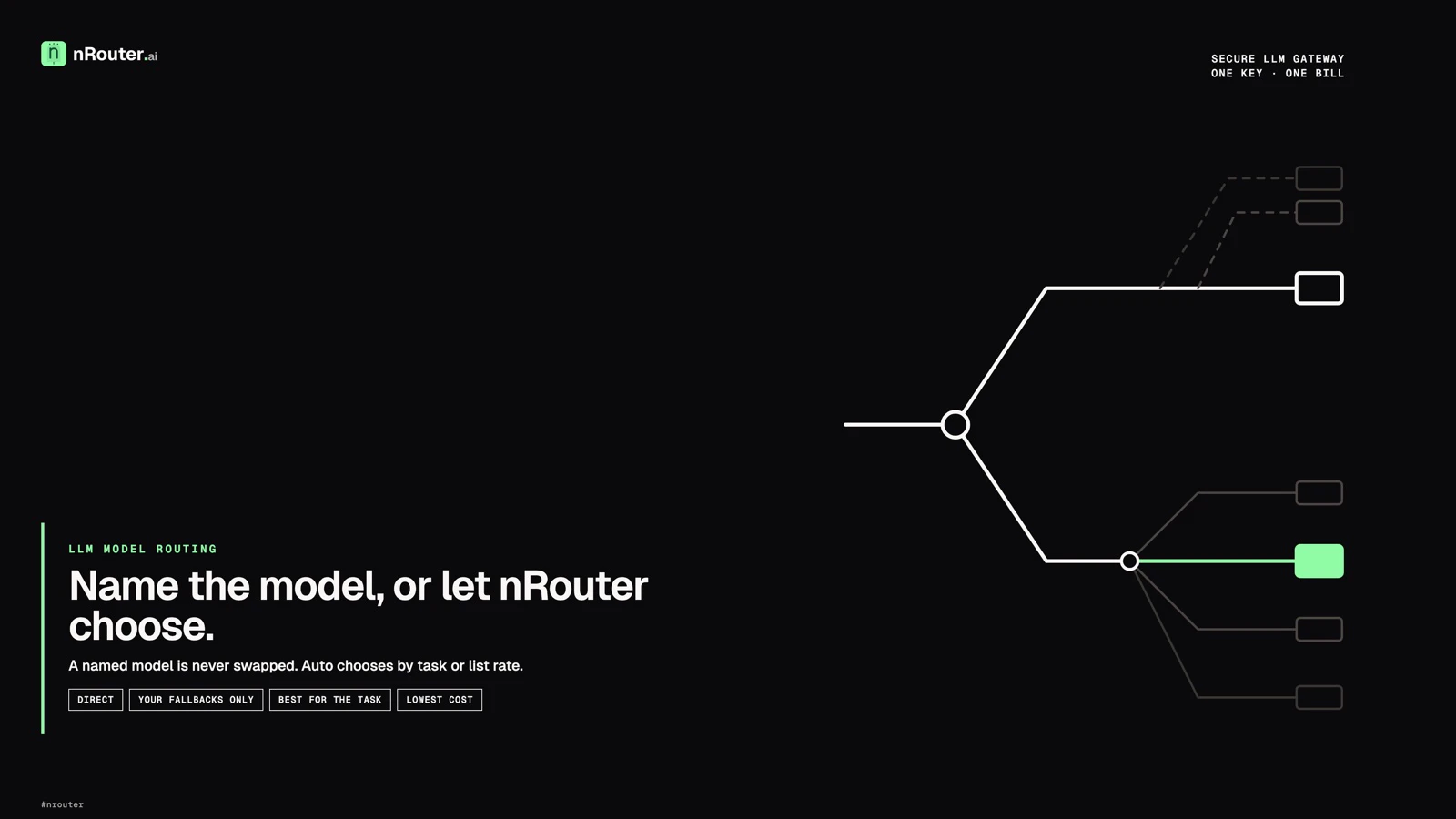
Two Ways to Ask for a Model: Direct, or nrouter/auto
Product

Two Ways to Ask for a Model: Direct, or nrouter/auto

nRouter gives you two ways to ask for a model. Name one and it is never swapped, except through a fallback you configured. Send nrouter/auto and nRouter chooses, by Best for the task or Lowest cost.

nRouter TeamnRouter Team
9 minRead →
Warm Connection Pools in an LLM Gateway, and What They Do Not Fix
Engineering

Warm Connection Pools in an LLM Gateway, and What They Do Not Fix

What a reused provider connection saves an LLM request, what it cannot save, and how to measure the gateway's share of your latency instead of trusting a headline number.

Suresh
11 minRead →
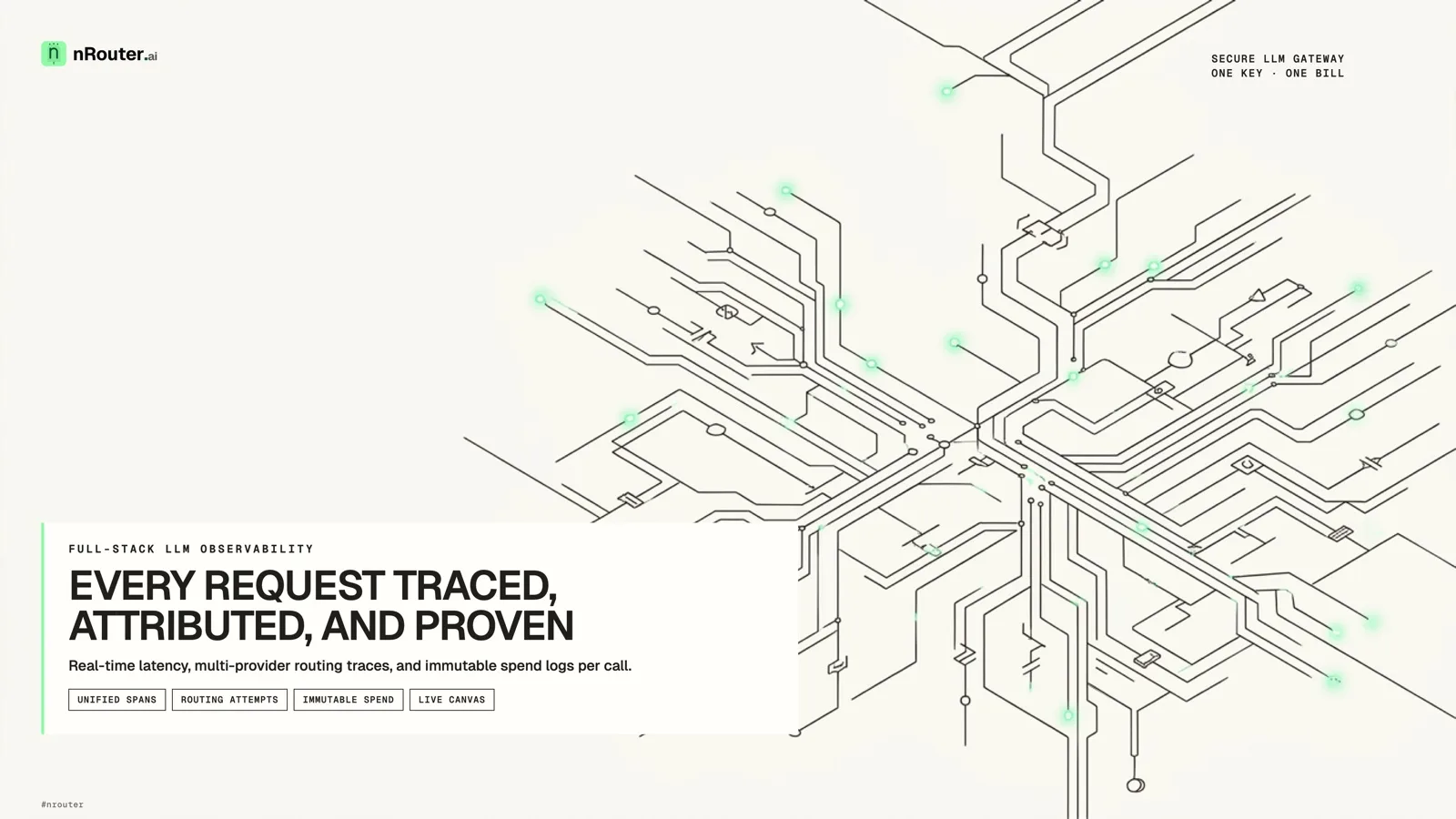
LLM Observability: Traces, Spend Logs, and Request Debugging
Product

LLM Observability: Traces, Spend Logs, and Request Debugging

Inspect end-to-end inference traces, exact-cent spend rows, and multi-provider routing decisions under one request ID, with response headers on every call.

Suresh
11 minRead →
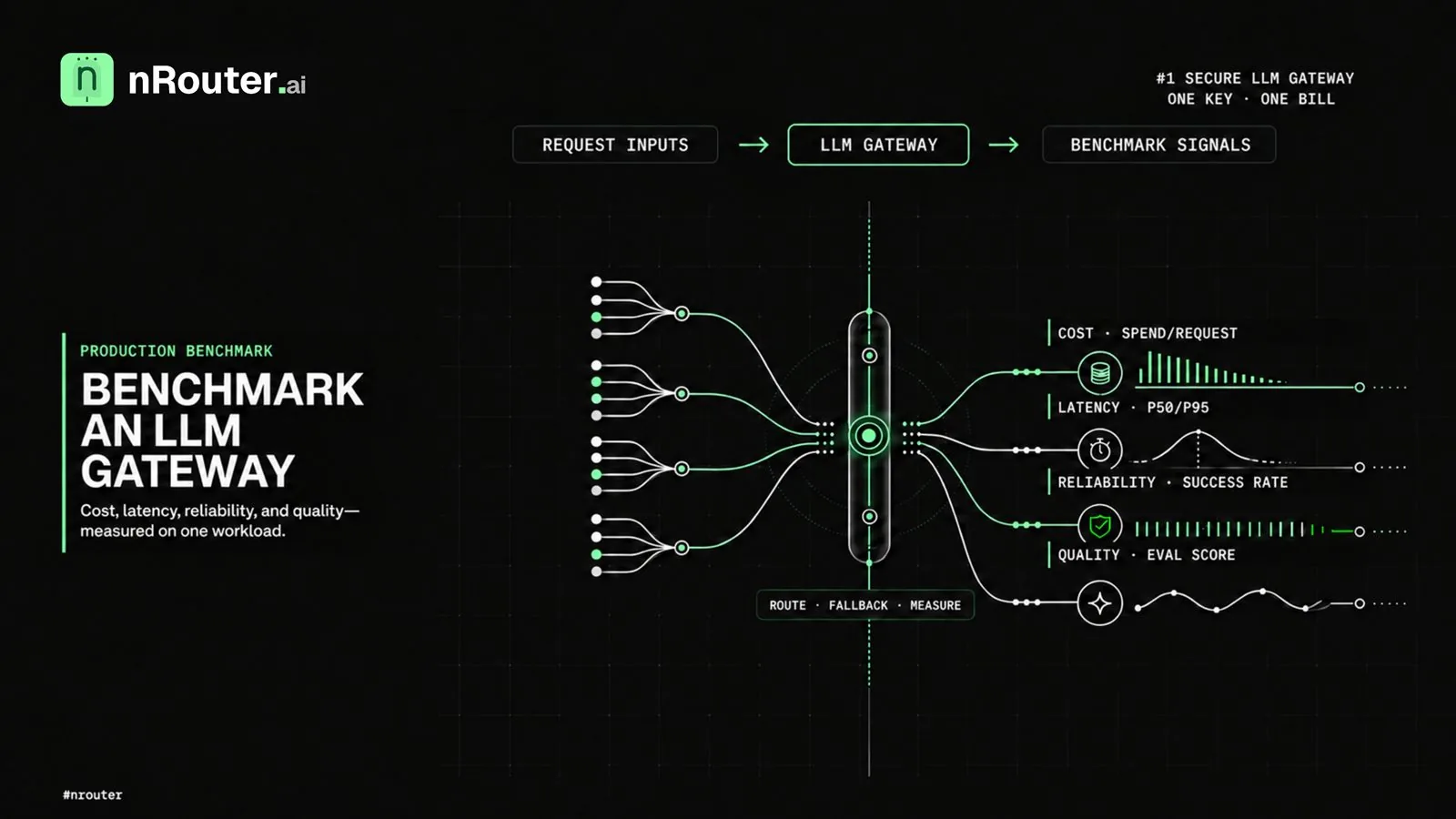
How to Benchmark an LLM Gateway in Production: Cost, Latency, Reliability, and Quality
Engineering

How to Benchmark an LLM Gateway in Production: Cost, Latency, Reliability, and Quality

Follow a repeatable LLM gateway benchmark methodology for cost, latency, reliability, failover, and output quality before publishing measured results.

Suresh
13 minRead →
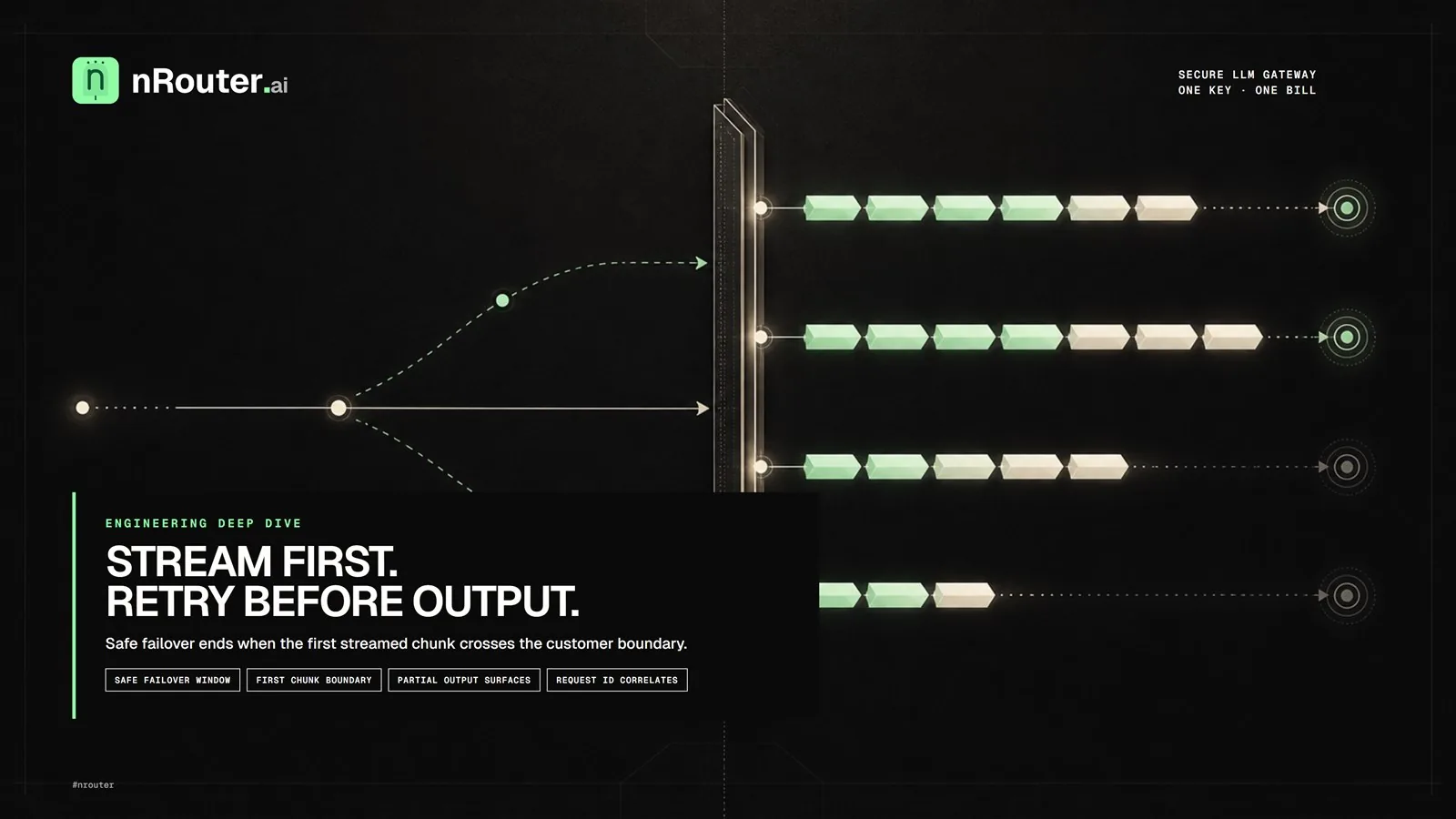
LLM Streaming Failures: Why Mid-Stream Retry Duplicates Output
Engineering

LLM Streaming Failures: Why Mid-Stream Retry Duplicates Output

Understand where LLM streaming failover stops being safe, why partial output cannot be replayed silently, and how clients recover without duplicated text.

Suresh
11 minRead →
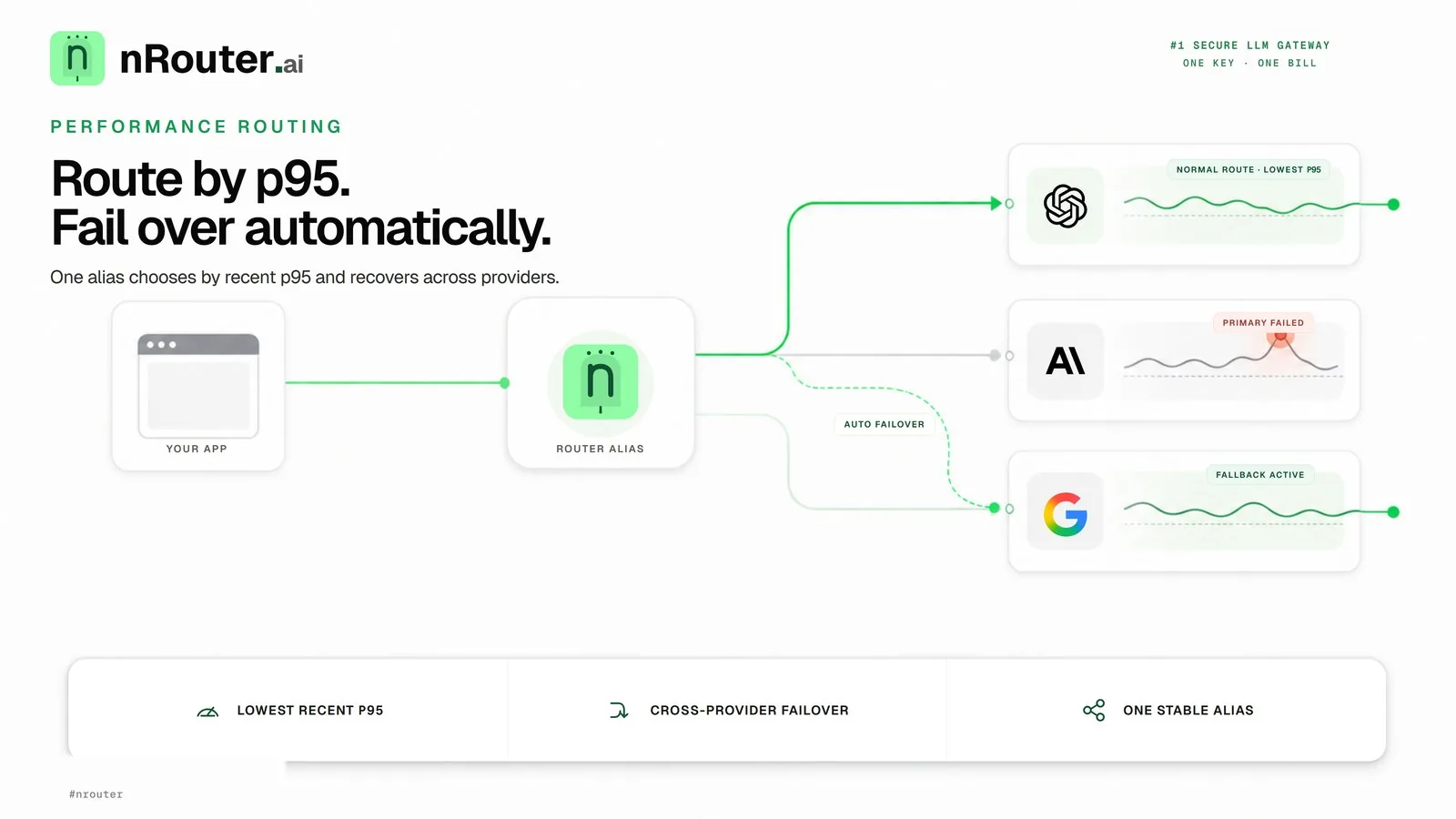
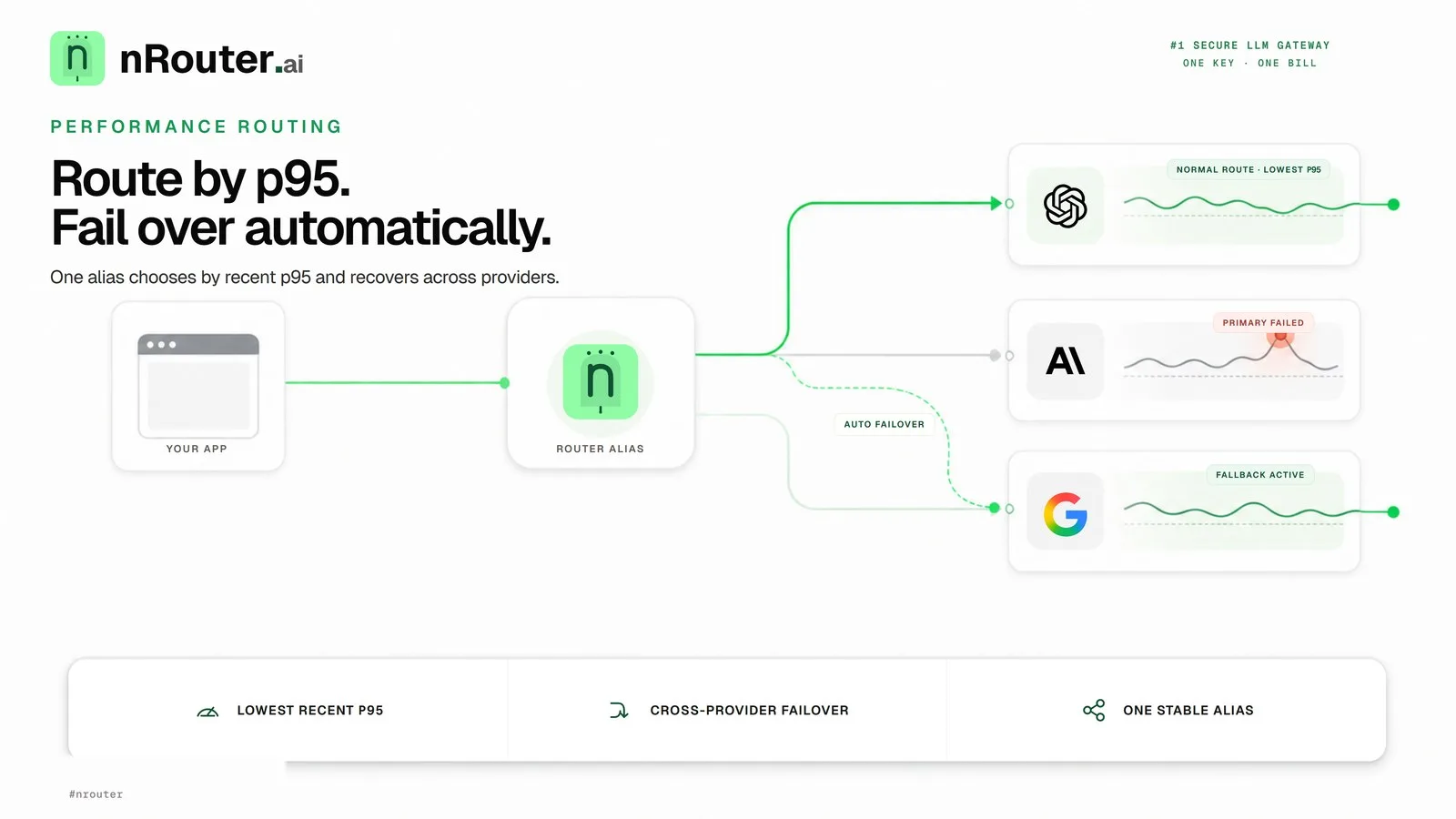
Latency Routing and Automatic Failover Without Retry Code
Guides

Latency Routing and Automatic Failover Without Retry Code

Measure candidate model latency, configure explicit fallbacks, understand the gateway attempt budget, and verify the result on your own p95.

Sugumar
11 minRead →
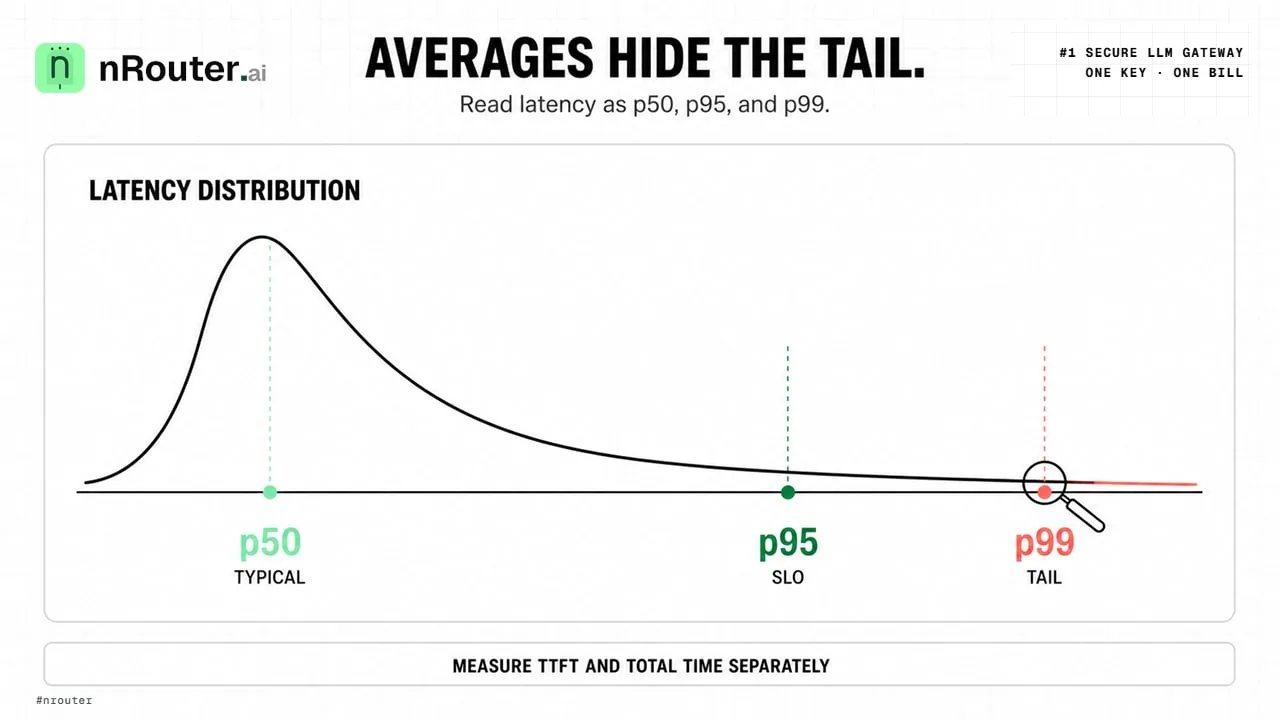
LLM Latency: p50, p95, p99, and Time-to-First-Token
Engineering

LLM Latency: p50, p95, p99, and Time-to-First-Token

Why average LLM latency misleads, how to analyze p50/p95/p99 distributions and time-to-first-token, and how to isolate tail delays across model providers.

Suresh
11 minRead →
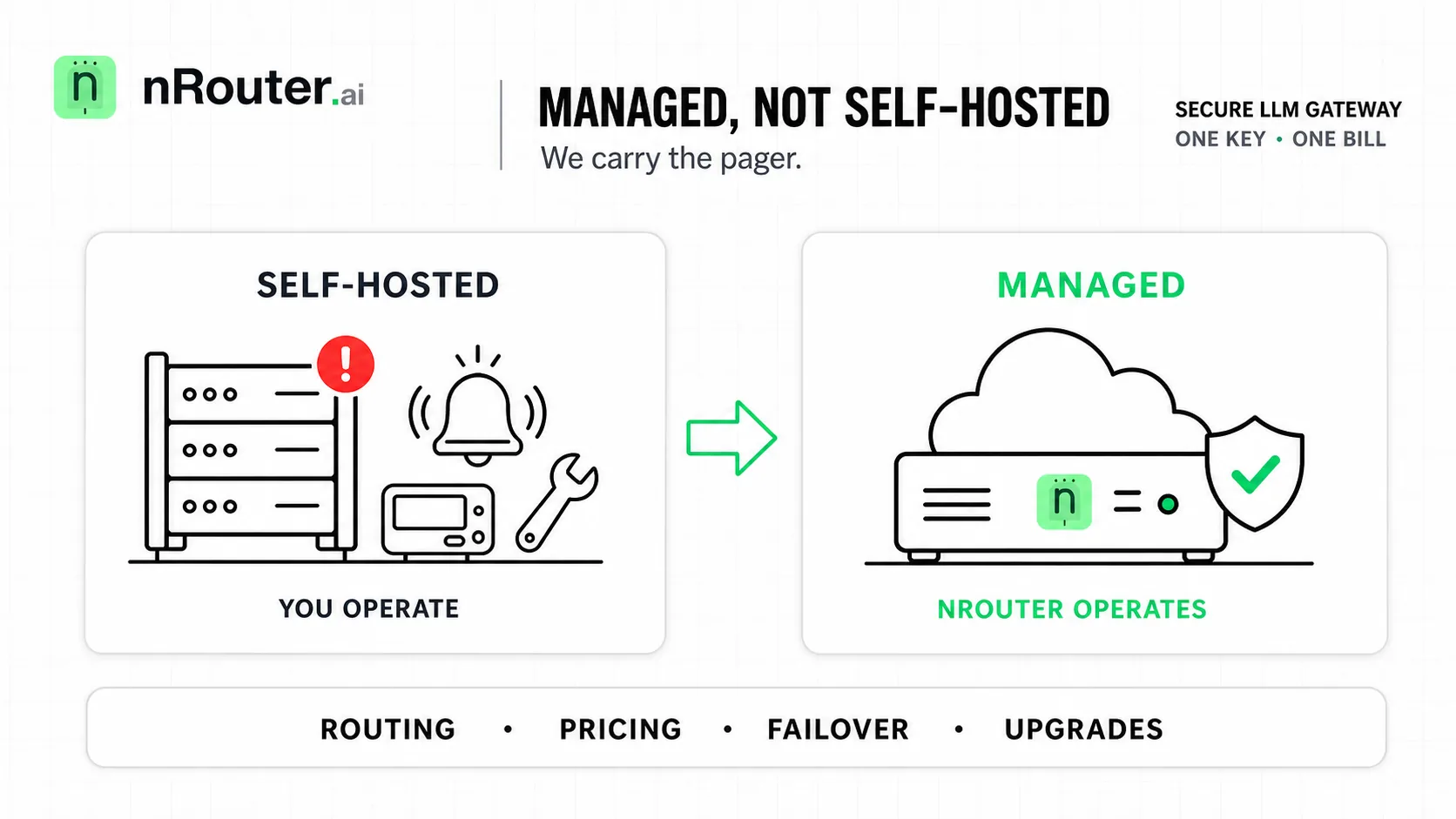
Managed LLM Gateway vs Self-Hosted: Why We Carry the Pager
Company

Managed LLM Gateway vs Self-Hosted: Why We Carry the Pager

Why nRouter is a managed LLM gateway rather than self-hosted software: the operational burden of proxy hosting, and when running your own infra still wins.

nRouter TeamnRouter Team
10 minRead →
Reserve-and-Settle: Never Overspend a Credit Balance
Engineering

Reserve-and-Settle: Never Overspend a Credit Balance

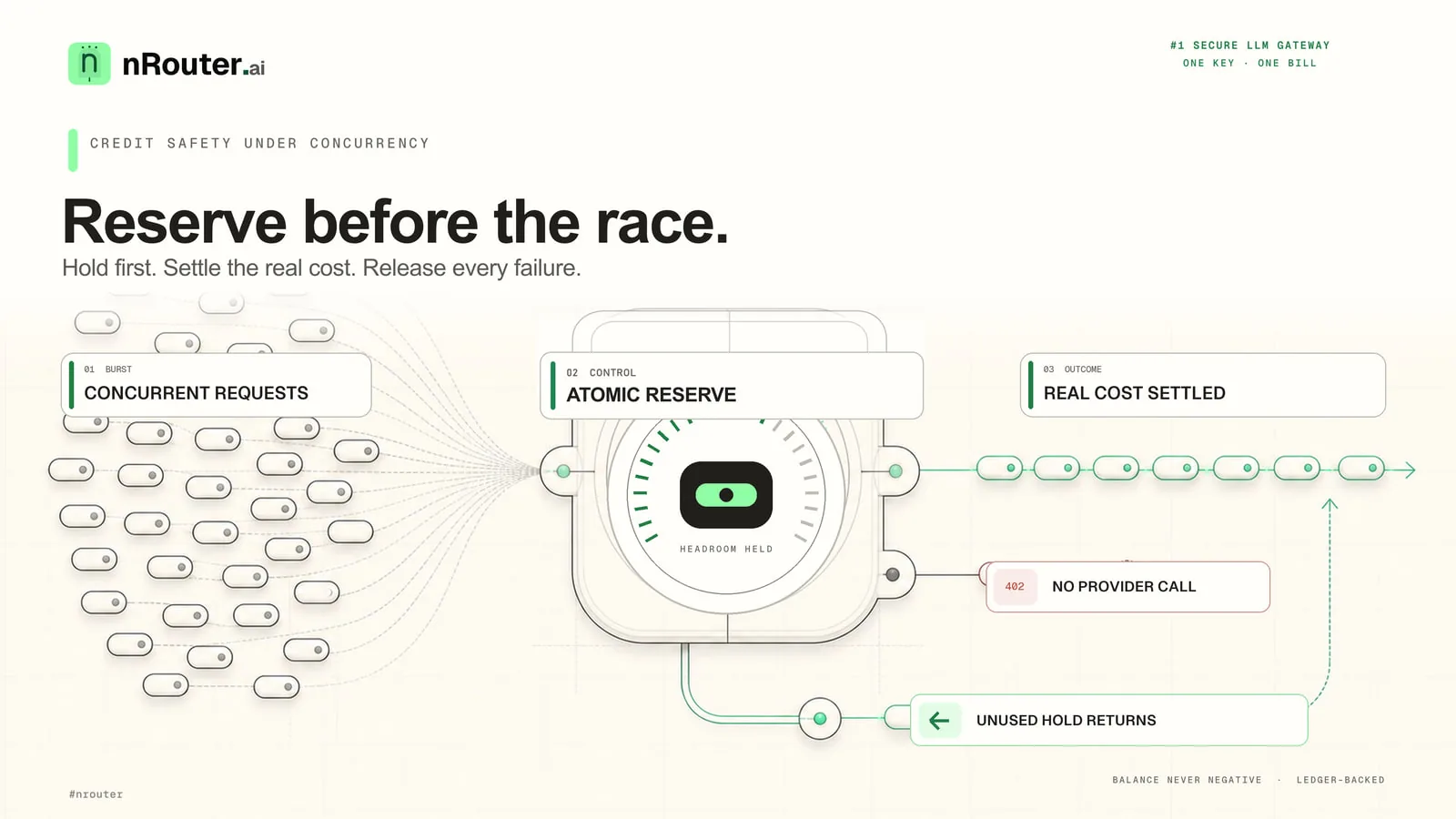
Checking a balance and then calling a provider is a race, and under the fan-out an LLM gateway is built for it loses. Here is the reserve, settle and release contract as you can observe it — what your balance does on success, on an upstream failure, on a timeout, and when the cost is never knowable.

Suresh
12 minRead →
Capping a Coding Agent: Per-Run Budgets, Fallback, Attribution
Product

Capping a Coding Agent: Per-Run Budgets, Fallback, Attribution

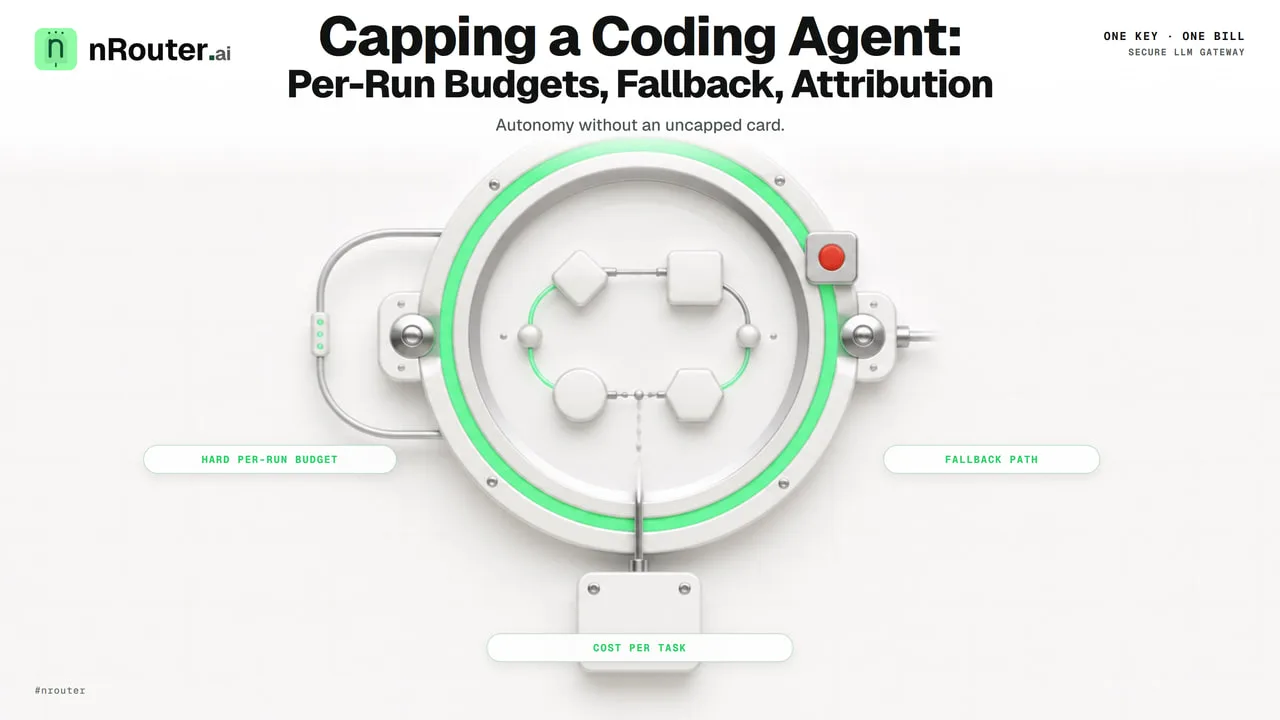
A coding agent turns one task into hundreds of model calls. Here is how a gateway gives each run a hard ceiling that holds under burst, a fallback path that does not strand a half-finished edit, and a cost you can read per task.

Suresh
11 minRead →
429 vs 402 on an LLM Gateway: Which to Retry, Which to Stop
Guides

429 vs 402 on an LLM Gateway: Which to Retry, Which to Stop

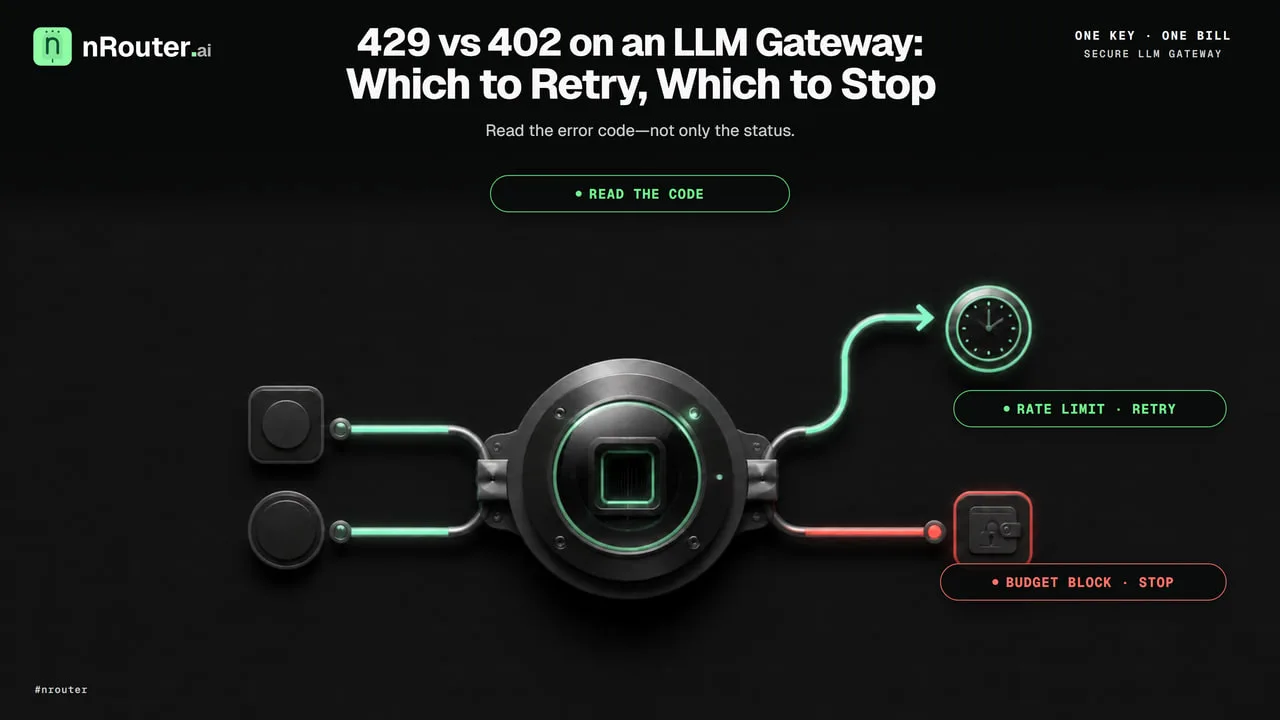
Both a throttle and a budget block can arrive as 429, and both an empty balance and a team budget arrive as 402. Branch on the error code, not the status — with backoff, jitter, and idempotent retries.

Sugumar
9 minRead →
Provider Fallback Chains: Surviving an OpenAI Outage
Engineering

Provider Fallback Chains: Surviving an OpenAI Outage

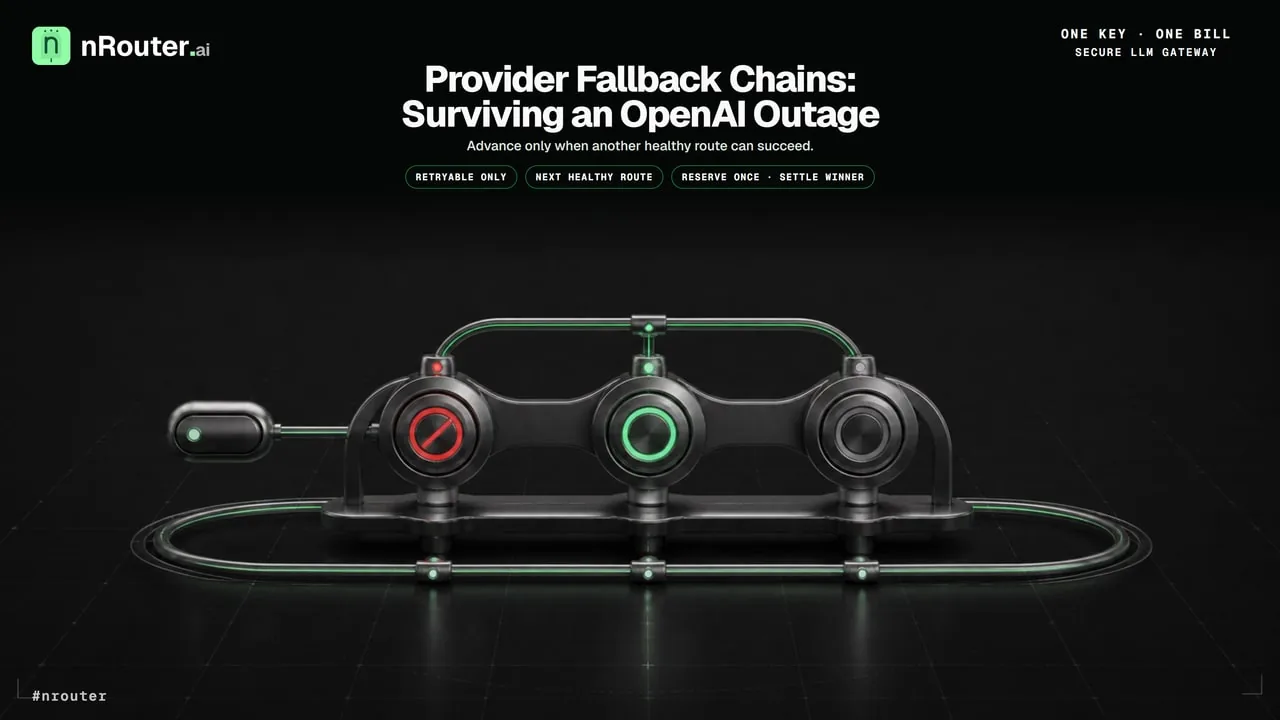
How an ordered LLM fallback chain reroutes failing requests to healthy providers, advances only on retryable errors, and bills spend for exactly one hop.

Suresh
11 minRead →